
You've Been on Podcasts. So Why Does It Feel Like Nothing Happened?
A follow-up to our webinar: How to Turn Podcast Guesting Into Real Opportunities
Let's just say it out loud.
You did the thing. You got booked, you showed up, you told your story, you probably said "amazing question" at least twice. And then the episode dropped and... nothing. No spike in followers. No flood of DMs. No one showed up magically ready to hire you.
Sound familiar?
During our recent webinar, this was the number one thing people kept circling back to. Not "how do I get booked" (they'd done that part). It was: "I've been on 10, 15 podcasts and I genuinely don't know what I got out of it."
Here's the uncomfortable answer: it's probably not the podcasts. It's what happened (or didn't happen) before, during, and after.
The Mindset Problem Nobody Talks About
If you walked into your podcast appearances thinking "okay, this is how I get clients," that's the first place things went sideways. Podcast guesting done right is a long game. It's a reputation game. The questions you should be asking going in aren't "how many sales will this drive?" They're:
What do I want to be known for?
Who am I trying to reach?
What room do I want to be invited into next?
Going on podcasts with a sales mindset means you either come across as overselling, or you walk away disappointed when it doesn't convert immediately. Either way, you lose. You're not closing deals on podcasts. You're becoming the person people think of when the deal comes up.
The Real Reason You’re Not Seeing ROI
Here are the actual culprits, based on what we've seen time and again:
1. You don't have a clear through-line.
If you've been saying yes to every podcast that invites you (different topics, different audiences, different versions of yourself) you're not building a brand. You're building noise.
One of our webinar attendees put it perfectly: she'd been on a bunch of podcasts over the years, but because she didn't have a singular focus, none of it was pointing anywhere. The good news? The content isn't wasted. Go back and pull the clips where your real message came through, the bits that align with where you're heading now. You don't have to send people to the full episode. The clip is yours.
2. Your episode went live. And then you let it die.
This one stings because it's so fixable. The host published it. Maybe they tagged you. Maybe you reshared it once. And then everyone moved on.
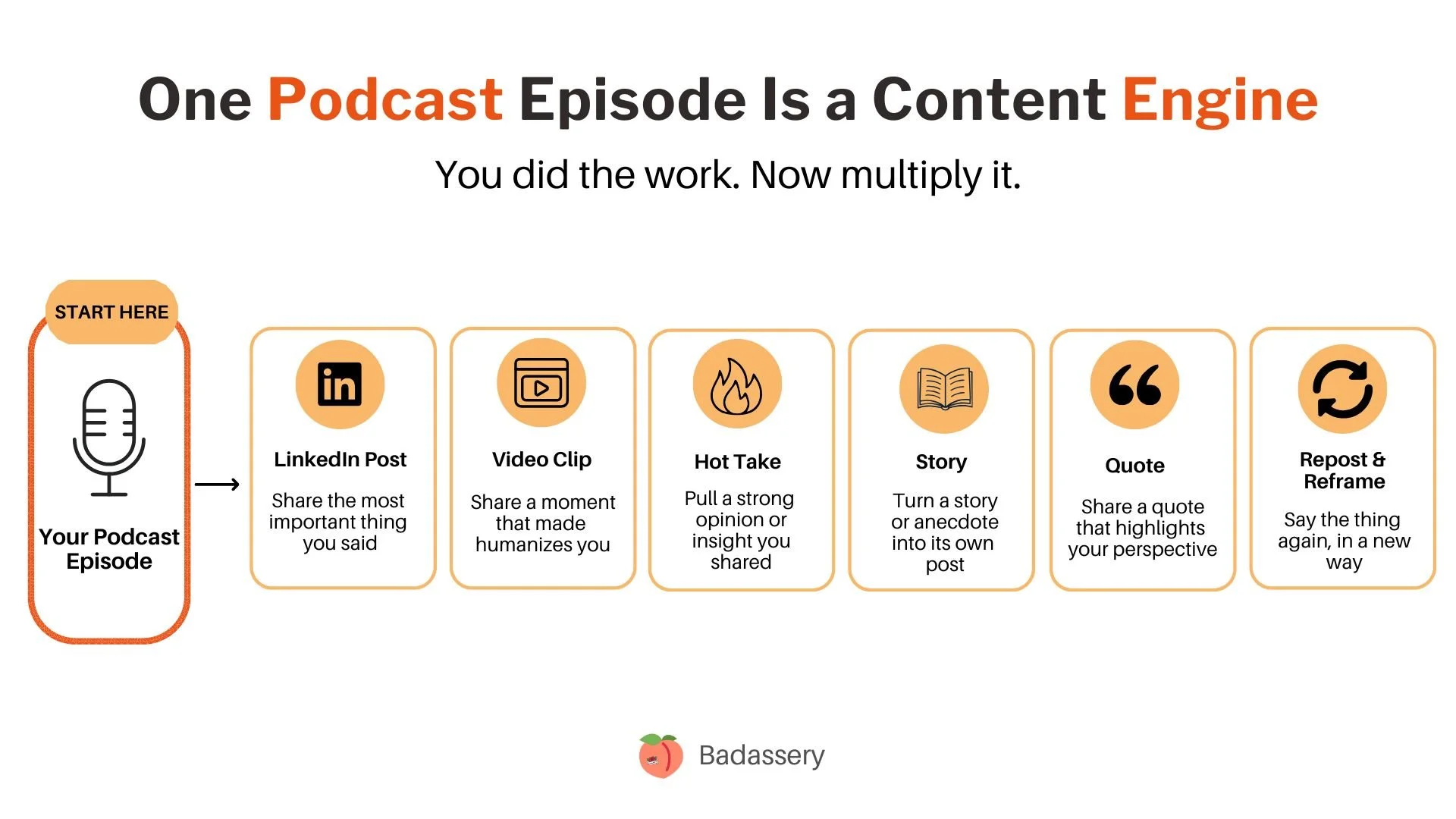
That episode is not a one-time asset. It's raw material. One interview can become social clips, a newsletter, a blog post, a speaker reel, pull quotes, and more, over months, not just days. The guests who actually see results are the ones treating each episode like a content engine, not a one-and-done checkbox.
Ask the host for the raw file if you can. Take different clips at different times. Let the same interview support five different things you're working on this year.
Make it stand out
Whatever it is, the way you tell your story online can make all the difference.
3. You didn't give listeners anywhere to go.
At the end of almost every podcast interview, the host asks: "Where can people find you?"
If your answer was something like "oh, everywhere, LinkedIn, Instagram, my website..." you've just sent people nowhere. One CTA. That's it. One place, one action. Whether it's a free resource, your LinkedIn, or a call booking link, make it dead simple and make sure it's somewhere worth landing.
4. The shows weren't actually right for you.
A huge podcast with a broad audience sounds impressive. But 200 downloads a month of exactly your ideal listener? That wins every time.
Visibility for the sake of visibility doesn't compound. Visibility in front of the right people does.
What “Maximizing the Win” Playing Small Actually Looks Like
Our founder Danielle broke this down in the webinar, and it's worth repeating here:
Repurpose relentlessly. Your episode has no expiration date. Keep pulling from it.
Add it to your credibility stack. Build an "As Heard On" section on your website. Embed episodes. Write 2-sentence summaries under each one (great for SEO too). Every appearance is proof that someone thought you were worth listening to, so show it off.
Nurture the host. This one is wildly underestimated. Hosts are connectors. They know other hosts. They have audiences that trust them. If you showed up well and stayed in touch, that relationship can open doors you haven't even imagined yet. At minimum: say thank you. Share when they tag you. Be a human.
Track what's actually working. Ask hosts to include a trackable link in the show notes. Use Bit.ly or UTM parameters so you can see which appearances are actually driving traffic. You can't optimize what you're not measuring.
So What Now?
If you've been on podcasts and haven't seen the return you wanted, you're not doing it wrong. You're probably just missing a few key pieces, and they're all fixable.
Get clear on your goals before you book the next one. Have a single, sharp CTA ready. Repurpose every episode like it's your job. Treat your hosts like the valuable relationships they are.
And if you want a more strategic approach to the whole thing, finding the right shows, crafting pitches that actually land, building the system around it, that's exactly what we do at Badassery.
Missed the webinar? We covered everything from how to build a bookable bio, to what makes a pitch actually work, to how to find the right shows. Reach out to danielle@badassery-hq.com and we'll get you the recording and playbook.